Author: Manish Agarwal

  • Book Review: The Mountains We Call Home by Kim Michele Richardson

    Book Review: The Mountains We Call Home by Kim Michele Richardson

    There are books you enjoy while reading, and then there are books that quietly settle into your heart, refusing to leave long after you’ve turned the final page. The Mountains We Call Home is one of those rare stories.

    The journey of Cussy Mary and Jackson is both tender and unforgettable—a testament to the idea that the deepest love is rarely the easiest. Their story is woven with separation, hardship, resilience, and hope, reminding us that love isn’t defined by perfect moments but by the courage to endure life’s greatest trials.

    Watching them walk different paths, carrying the weight of circumstances beyond their control, is heartbreaking. Yet every page carries the quiet promise that some bonds are too powerful to be broken. Their reunion doesn’t feel accidental—it feels destined, as though fate had been patiently guiding them back to one another all along.

    What makes this novel truly special is its emotional authenticity. Every chapter draws you deeper into the lives of its characters, making you celebrate their victories, mourn their losses, and silently hope they find the happiness they so richly deserve. Kim Michele Richardson doesn’t merely tell a love story; she explores sacrifice, perseverance, family, and the enduring strength of the human spirit.

    The emotions never feel forced. They are honest, raw, and deeply human. Long after closing the book, I found myself thinking about Cussy Mary, Jackson, and the world they inhabit—a sign of storytelling at its finest.

    If you appreciate historical fiction with heartfelt relationships, unforgettable characters, and a narrative that stays with you well beyond the last page, The Mountains We Call Home deserves a place on your reading list.

    Some books entertain for a few hours. Others leave a lasting imprint on your soul. This is one of them.

    ⭐⭐⭐⭐⭐ 5/5 – A deeply moving and heartwarming novel that beautifully proves some souls are simply meant to find each other.


  • The South China Sea: More Than a Territorial Dispute

    The South China Sea: More Than a Territorial Dispute

    When people hear about the South China Sea, the headlines often reduce the story to another confrontation between China and the Philippines. While that is currently the most visible flashpoint, the dispute is far more intricate. It is a convergence of international law, maritime strategy, economic security, military deterrence, and great-power competition.

    A Dispute Rooted in Competing Claims

    China asserts historical rights over a vast portion of the South China Sea through what is commonly referred to as the “Nine-Dash Line.” The Philippines, however, maintains that many of the contested waters and maritime features fall within its 200-nautical-mile Exclusive Economic Zone (EEZ), as defined under the United Nations Convention on the Law of the Sea (UNCLOS).

    In 2016, an international arbitral tribunal ruled that China’s historic claims, as represented by the Nine-Dash Line, have no legal basis under UNCLOS. Beijing rejected the ruling, arguing that the tribunal lacked jurisdiction and continues to assert its claims. This legal disagreement remains one of the central reasons why tensions persist.

    Why the South China Sea Matters

    The South China Sea is among the world’s most strategically valuable maritime regions.

    Approximately one-third of global maritime trade transits these waters each year. It serves as a crucial route for energy imports, manufactured goods, and raw materials connecting East Asia with Europe, the Middle East, and beyond. Any instability in this corridor has the potential to disrupt global supply chains, increase freight costs, influence energy prices, and create wider economic uncertainty.

    Beyond commerce, the region is believed to contain substantial reserves of hydrocarbons and supports one of the world’s richest fishing grounds, making it economically significant for all claimant states.

    The United States and the Strategic Equation

    The United States is not a claimant in the territorial dispute, yet it plays a pivotal strategic role.

    Washington maintains a Mutual Defense Treaty with the Philippines dating back to 1951. In recent years, U.S. officials have reiterated that an armed attack on Philippine armed forces, vessels, or aircraft operating in the Pacific, including the South China Sea, could trigger treaty obligations.

    This does not mean every confrontation will automatically result in military intervention. However, it significantly raises the geopolitical stakes, as even a localized incident could rapidly involve larger powers.

    China’s Strategic Imperative

    For China, the South China Sea extends well beyond economic interests.

    The region provides vital sea lines of communication through which much of China’s energy imports and international trade pass. It also forms an important component of Beijing’s maritime security strategy, allowing it greater operational depth for its naval forces and enhancing its influence throughout the Indo-Pacific.

    From Beijing’s perspective, maintaining a strong presence in these waters is closely tied to national security and long-term strategic interests.

    Taiwan: A Parallel Strategic Theatre

    Although Taiwan is geographically distinct from the South China Sea dispute, the two issues are increasingly interconnected within broader Indo-Pacific security dynamics.

    Taiwan is home to the world’s most advanced semiconductor manufacturing ecosystem. Companies based there produce a substantial share of the cutting-edge chips powering smartphones, artificial intelligence systems, data centers, automobiles, and defense technologies.

    Any major regional conflict—whether in the Taiwan Strait or the South China Sea—would likely have profound consequences for the global technology industry and international markets.

    Looking Ahead

    The South China Sea represents far more than competing territorial claims.

    It is a contest over maritime law, strategic influence, military deterrence, economic security, and the future architecture of the Indo-Pacific region.

    The challenge for all stakeholders will be preventing tactical confrontations at sea from escalating into strategic crises. Diplomacy, adherence to international law, and effective crisis-management mechanisms remain essential to ensuring that one of the world’s busiest maritime corridors does not become the epicenter of a wider geopolitical conflict.

    As tensions continue to evolve, the South China Sea will remain one of the defining geopolitical stories of the twenty-first century—not simply because of the waters themselves, but because of what they represent in the emerging global order.

  • Political Shift In UK

    Political Shift In UK

    The UK is entering a new political chapter at a time when its economy still faces significant structural challenges. Instead of viewing this only as Britain’s problem, India should view it as a strategic opportunity.

    The India–UK Free Trade Agreement should be more than just lower tariffs. It should become the foundation for joint manufacturing, technology partnerships, healthcare collaboration, infrastructure development, education, defence, and investment.

    Britain brings world-class finance, research, and innovation. India brings scale, skilled talent, manufacturing, and one of the fastest-growing economies in the world.

    The strongest partnerships are not built on dependency—they are built on complementing each other’s strengths.

    If approached with long-term vision, this could become one of the defining strategic alliances of the next decade.

    #India#UnitedKingdom#FTA#Economy#Trade#Manufacturing#Geopolitics#StrategicPartnership

  • Gratitude Before Complaints: Faith Is Not a Transaction

    Gratitude Before Complaints: Faith Is Not a Transaction

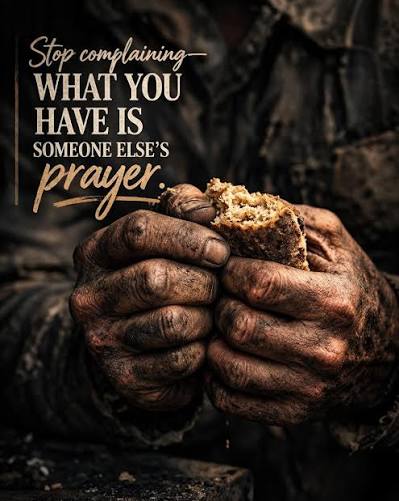
    One thing I have observed throughout my life is that people complain far more than they express gratitude.

    “My career isn’t flourishing despite all my hard work.”

    “My children aren’t as talented as others.”

    “I always feel anxious whenever life becomes difficult.”

    These emotions are real. Life is not easy, and challenges are a part of every human journey. There is nothing wrong with feeling disappointed or exhausted. What is wrong is turning every disappointment into a reason to blame God.

    Have we ever paused to ask ourselves a different question?

    How often do we thank God for everything that has already gone right?

    How often do we express gratitude for the opportunities we received, the failures that taught us resilience, the people who stood beside us, or the doors that unexpectedly opened?

    When success arrives, we proudly claim our intelligence, our hard work, and our determination. But when failure knocks, we suddenly question God’s justice.

    Life doesn’t work that way.

    The essence of Lord Krishna’s teachings to Arjun in the Bhagavad Gita is simple: God can guide us, strengthen us, and show us the path, but He does not walk the path for us. We must fight our own battles. We must make our own choices. We must learn from our own failures. And when we stumble, faith gives us the strength to rise again.

    If our own decisions contribute to our setbacks, how can we place the entire burden of blame upon the Almighty?

    Perhaps the first lesson every child should learn is gratitude before expectation.

    Manifest your dreams. Work relentlessly toward them. Pray with sincerity. But do not treat prayer as a business transaction.

    Faith is not an exchange policy.

    It is not, “Solve my problems, and I will offer five kilograms of laddoos.”

    God cannot be negotiated with. He cannot be bribed. Devotion is measured by the purity of our intentions, not by the size of our offerings.

    Real faith begins when we learn to say “thank you” before asking for anything.

    Because gratitude changes the way we see life. It reminds us that even when every prayer is not answered in the way we expect, countless blessings have already been placed in our hands.

    Complain less.

    Reflect more.

    Work harder.

    Trust the process.

    And above all, remain grateful—not because life is perfect, but because every day offers another opportunity to become stronger, wiser, and more compassionate.

    That, perhaps, is one of God’s greatest blessings.

  • Book Review: Little Fires Everywhere

    Book Review: Little Fires Everywhere

    Celeste Ng’s writing was a wonderful surprise, and I’m glad this was my first book by her. From the very first chapter, the story drew me in and kept me hooked until the final page.

    The characters felt authentic, and the emotions were handled with remarkable depth and subtlety. It’s a beautifully paced novel that balances suspense with heartfelt storytelling.

    I never found myself losing interest, which made it an incredibly satisfying read. This is definitely a book I’d recommend to anyone looking for an engaging and thought-provoking story.

  • A Political Earthquake in Washington?

    A Political Earthquake in Washington?

    For years, discussions about Jeffrey Epstein’s alleged intelligence links were largely confined to investigative journalists, independent researchers, and online speculation. Now, those questions have entered the highest levels of American politics.

    In a recent interview, U.S. Vice President JD Vance stated:

    “He clearly had connections to the highest levels of American intelligence. He clearly had connections to the highest levels of Israeli intelligence.”

    Whether one agrees with him or not, this is an extraordinary statement coming from a sitting Vice President. It is already fueling intense debate in Washington and beyond because it echoes claims that have long been disputed and remain unproven.

    The bigger question now is not simply what JD Vance said, but whether these remarks will lead to greater transparency, further investigations, or just another chapter in one of the most controversial scandals in modern American history.

    Sometimes, a single statement can reshape the political conversation.

    What do you think—will this change public perception of the Epstein case, or will it simply deepen the political divide?

    #JDVance#EpsteinFiles#USPolitics#Geopolitics#BreakingNews#CurrentAffairs#PoliticalAnalysis

  • Sunna Toh Logon Ne Ab Shuru Kiya Hai…

    Sunna Toh Logon Ne Ab Shuru Kiya Hai…

    “Sunna toh logon ne ab shuru kiya hai… jabki baat toh main pehle bhi yehi karta tha.”

    Kabhi ruk kar sochna…

    Aakhir badla kya?

    Na meri soch badli…

    Na mere alfaaz.

    Na sach naya hua…

    Na baatein.

    Phir aisa kya hua…

    Ki kal tak jo baatein hawa mein bikhar jaati thi,

    Aaj wahi baatein logon ke dilon mein utarne lagi?

    Kal tak jo meri nasihaton par muskura kar nikal jaate the,

    Aaj wahi log meri har baat ko gaur se sunte hain.

    Pehle bhi maine wahi kaha tha…

    Jo aaj keh raha hoon.

    Lekin us waqt meri baaton ki nahi,

    Meri haisiyat ki keemat lagayi jaati thi.

    Aaj manzil nazar aane lagi hai…

    Toh meri awaaz mein bhi logon ko sachchai sunai dene lagi.

    Duniya aksar alfaazon ko nahi,

    Un alfaazon ke peeche khade insaan ko sunti hai.

    Ek baat yaad rakhna mere dost…

    Kabhi is baat ka dukh mat manana ki

    Aaj tumhe koi nahi sun raha.

    Dukh tab manana…

    Jab tum khud apni awaaz par bharosa khona shuru kar do.

    Apni poori taqat kisi ko samjhane mein mat laga.

    Apni poori zindagi khud ko itna behtar banane mein laga…

    Ki ek din log tumhe samajhne ke liye bechain ho jaayen.

    Itni unchai chhoo lo…

    Ki log tum tak pahunchne ki koshish karein,

    Tumhe neeche kheenchne ki nahi.

    Apni zindagi ko itna khoobsurat bana do…

    Ki tumhari kahani kisi kitaab ka panna nahi,

    Kisi ki zindagi ka hausla ban jaaye.

    Zindagi roz humein misaal deti hai…

    Koila bhi zameen se hi nikalta hai…

    Aur sona bhi.

    Dono mitti ki god se janm lete hain.

    Lekin ek aag dekhte hi raakh ban jaata hai…

    Aur doosra usi aag mein tap kar

    Apni pehchaan bana leta hai.

    Aag dono ke hisse mein aati hai…

    Farq bas itna hota hai,

    Ek jal jaata hai…

    Aur ek nikhar jaata hai.

    Tumhe bhi faisla karna hai…

    Raakh banna hai…

    Ya chamak.

    Pathar bhi wahi hota hai…

    Jo saalon tak hamare pairon tale dhool khata rehta hai.

    Uski taraf koi mudkar nahi dekhta.

    Lekin wahi pathar…

    Jab kisi mandir ki deewar ban jaata hai,

    Ya kisi imaarat ki shaan ban jaata hai,

    Toh log usse dekhkar wah-wah karte hain.

    Pathar nahi badla…

    Uski jagah badli.

    Uska roop badla.

    Uska maqsad badla.

    Aur maqsad badalte hi…

    Uski keemat bhi badal gayi.

    Insaan ki kahani bhi kuch aisi hi hoti hai.

    Isliye…

    “Log kya kahenge?”

    Yeh sawaal apni zindagi se mita do.

    Isse kahin bada sawaal yeh hai…

    “Main aisa kya karun…

    Ki ek din log mere kehne ka intezaar karein?”

    Un logon ke liye mat jeena…

    Jo tumhari majboori sunkar muskura dete hain.

    Jo tumhare aansuon mein bhi apni jeet dhoondte hain.

    Aise log kabhi tumhare nahi hote.

    Aur jo waqai tumhare honge…

    Unhe tumhari safai nahi,

    Tumhari sachchai nazar aayegi.

    Yaad rakhna…

    Sunna toh duniya sabko chahti hai.

    Kisi ki kamzori…

    Kisi ki barbaadi…

    Kisi ki majboori.

    Lekin bahut kam log hote hain…

    Jinki baatein duniya dil se sunti hai.

    Isliye sunane ki zid mat karo…

    Sunne layak banne ki zid karo.

    Apni mehnat ko itna buland kar do…

    Ki tumhare alfaaz tumhari pehchaan ban jaayen.

    Apne kirdaar ko itna ooncha kar do…

    Ki tumhari khamoshi bhi ek paighaam ban jaaye.

    Aur jis din tum is maqam par pahunch gaye…

    Us din tumhe kisi ko pukaarna nahi padega.

    Log khud tumhare paas aayenge…

    Sirf tumhari ek baat sunne ke liye.

    Yaad rakhna…

    Duniya awaazon ko nahi,

    Wajood ko sunti hai.

    Isliye apni awaaz oonchi mat karo…

    Apna wajood ooncha karo.

    Jis din tumhara wajood ooncha ho gaya…

    Us din tumhare lafz nahi bolenge…

    Tumhari zindagi bolegi.

  • The Journey Is the Greatest Teacher

    The Journey Is the Greatest Teacher

    We often grow up believing that life is about winning—that success is measured by trophies, titles, money, or recognition. But as the years pass, I have come to realize something far more valuable.

    Life isn’t about winning every time. It’s about becoming the kind of person who keeps moving forward, regardless of the outcome.

    I’ve climbed many ladders in my life. Some led me to success, while others ended in disappointment. I’ve struggled through different phases, faced failures, experienced betrayal, and carried the weight of uncertainty. Yet through every setback, I continued to climb. I climbed without complaining, without blaming the world, and without expecting life to become easier.

    That, in itself, has been my greatest achievement.

    The journey teaches lessons that no classroom, motivational speaker, or viral social media reel ever can. Instagram, Facebook, and YouTube are filled with inspirational videos, but they can only motivate you for a moment. Real growth begins when life tests you personally. Your own experiences become your greatest mentors.

    Every mistake is a lesson. Every failure is feedback.

    The philosophy is simple: Do. Learn. Improve. Repeat.

    Too many people never begin because they are afraid of failing. But failure is not the opposite of success—it is a part of success. If you never take the first step, you’ll never discover what you’re capable of becoming.

    I believe the real goal in life is to become someone who can be knocked down a thousand times and still rise a thousand times—each time stronger, wiser, and faster than before. Resilience is not built in comfort; it is forged in adversity.

    Whether circumstances are easy or incredibly difficult, they are shaping you. Every challenge sharpens your perspective. Every obstacle strengthens your character. Every disappointment teaches patience, humility, and perseverance.

    Looking back, I don’t regret the roads that didn’t lead where I expected. Those detours taught me lessons I could never have learned from books or lectures. Experience has a way of revealing truths that knowledge alone cannot.

    One thing that has always defined me is my curiosity. I love to explore, regardless of the result. I would rather fail while trying something meaningful than spend my life wondering, “What if?” That mindset has shaped the person I am today.

    I don’t claim that I have reached my destination. I haven’t achieved every dream or found complete peace. There are still mountains to climb and goals to accomplish.

    But I can honestly say this:

    I am in love with the journey.

    I embrace its uncertainty, its struggles, and its unexpected turns because I know every challenge is preparing me for something greater. Every step is adding another layer to my character, another lesson to my story, and another reason to keep moving forward.

    Perhaps that is what life is really about—not arriving first, but becoming better with every mile traveled.

    So don’t fear failure.

    Don’t avoid difficult paths.

    Don’t measure your worth by how many times you win.

    Measure it by how many times you choose to stand up, learn, and continue walking.

    Because in the end, success is temporary.

    Character is permanent.

    And character is built through the journey.

  • A Masterpiece That Redefines the Meaning of Human Endurance

    A Masterpiece That Redefines the Meaning of Human Endurance

    There comes a point in every reader’s life when they begin to wonder whether they’ve already experienced the very best literature has to offer. You start believing that every new book follows a familiar pattern, every ending becomes predictable, and every character feels like someone you’ve already met in another story. If you’ve ever had that thought—or if you’re someone who judges a book by its epilogue—then this novel will completely change your perspective.

    From the very first pages, the story draws you into a world that is as beautiful as it is devastating. It isn’t merely about friendship, love, or success; it’s about survival. It’s about carrying invisible scars that the world can neither see nor fully understand. Every chapter peels back another layer, revealing emotions so raw and authentic that you begin to feel less like a reader and more like a silent witness to someone’s life.

    At the heart of the novel is Jude, a character whose journey is one of the most emotionally complex and unforgettable I have ever encountered. His past is filled with unimaginable pain, trauma, and suffering. As his story unfolds, you don’t simply sympathize with him—you carry his burdens alongside him. Every setback hurts, every small victory feels monumental, and every moment of hope becomes something you desperately want to protect.

    Equally remarkable is Willem. In a world where genuine loyalty often feels rare, Willem represents unconditional friendship and love in its purest form. He never tries to change Jude or force him to heal on someone else’s timeline. Instead, he simply remains present—patient, compassionate, and unwavering. Their relationship is one of the most beautifully written portrayals of devotion and companionship in modern literature.

    Then come Harold and Julia, whose presence transforms the story in an entirely different way. Their decision to welcome Jude into their family is not just an act of kindness; it is a reminder that family isn’t always defined by blood. Through their endless patience, acceptance, and unconditional love, they give Jude something he had been denied for most of his life—a place where he belongs. Their relationship with him is among the most touching aspects of the novel and serves as a powerful reminder of how love can heal, even if it cannot erase the past.

    What makes this book extraordinary isn’t simply its heartbreaking moments; it’s the honesty with which it portrays human suffering, resilience, and the complicated nature of healing. It refuses to offer easy answers or convenient resolutions. Instead, it invites readers to confront uncomfortable truths about trauma, loneliness, mental health, and the enduring need for connection.

    This is not an easy book to read. There are moments that will leave you emotionally exhausted, frustrated, and even heartbroken. Yet, despite its weight, it is impossible to look away. Every page carries emotional depth, every conversation feels meaningful, and every character leaves a lasting impression. Few books possess the ability to linger in your thoughts long after you’ve finished reading. This is undoubtedly one of them.

    By the time I reached the final page, I realized I hadn’t simply finished another novel—I had experienced something unforgettable. It challenged me, moved me, and reminded me why literature remains one of humanity’s greatest gifts.

    For me, this isn’t just an excellent novel; it is a masterpiece. It stands among the finest works of contemporary fiction I have ever read. My deepest appreciation goes to Hanya Yanagihara for crafting a story that is courageous, emotionally profound, and impossible to forget. Some books entertain us, some educate us, but a rare few transform us. This is one of those rare books.

  • You Can Be Wounded, But You Must Never Believe You’re Broken

    You Can Be Wounded, But You Must Never Believe You’re Broken

    Life has a strange way of testing us.

    Some days, it leaves us smiling. On others, it pushes us into darkness we never imagined we would face. You may experience depression. You may be hurt by the people you trusted the most. Anxiety may keep you awake at night. Illness may slow you down. Failure may make you question your own abilities.

    These experiences are real, and they can be overwhelming.

    But there is one belief you must never allow to take root:

    “I am broken.”

    There is an important difference between being wounded and being broken.

    A wound can heal. It may leave a scar, but that scar becomes a reminder of survival rather than defeat. Every scar tells a story of a battle fought and a lesson learned.

    Being “broken” is often a belief we impose on ourselves when life doesn’t go according to plan. Yet history is filled with people who suffered devastating losses, battled illness, endured heartbreak, or faced repeated failures before achieving extraordinary things. What separated them from everyone else was not luck—it was their refusal to let adversity define their identity.

    Your value is not determined by how many times you fall.

    Your value is revealed by how many times you choose to stand up.

    Every sunrise offers another opportunity to rebuild your confidence, sharpen your character, and continue moving forward. Resilience isn’t about pretending everything is fine. It’s about acknowledging your pain while refusing to let it become your permanent address.

    Society often celebrates perfection, but the strongest people are rarely those who have lived perfect lives. They are the ones who have carried invisible burdens with remarkable courage. They have stumbled, recovered, and continued walking despite the weight on their shoulders.

    If you’re reading this during one of the hardest chapters of your life, remember this:

    Your current situation is not your final destination.

    You are not defined by your failures, your diagnosis, your heartbreak, or your worst day.

    You are defined by your willingness to keep going.

    Healing may take time. Progress may be slow. Some days, simply getting out of bed is a victory. Celebrate those victories. They matter more than you realize.

    Life doesn’t ask us to be unbreakable.

    It asks us to be resilient.

    So, whenever life knocks you down, don’t ask, “Why me?” Instead ask, “What is this experience teaching me?”

    Because every storm eventually passes, and every person who keeps moving forward discovers a version of themselves that is wiser, stronger, and more compassionate than before.

    Final Thought

    You can be hurt.

    You can be anxious.

    You can be depressed.

    You can be sick.

    But never let any of those experiences convince you that you have lost your worth.

    You are not broken.

    You are healing.

    And there is a world of difference between the two.